
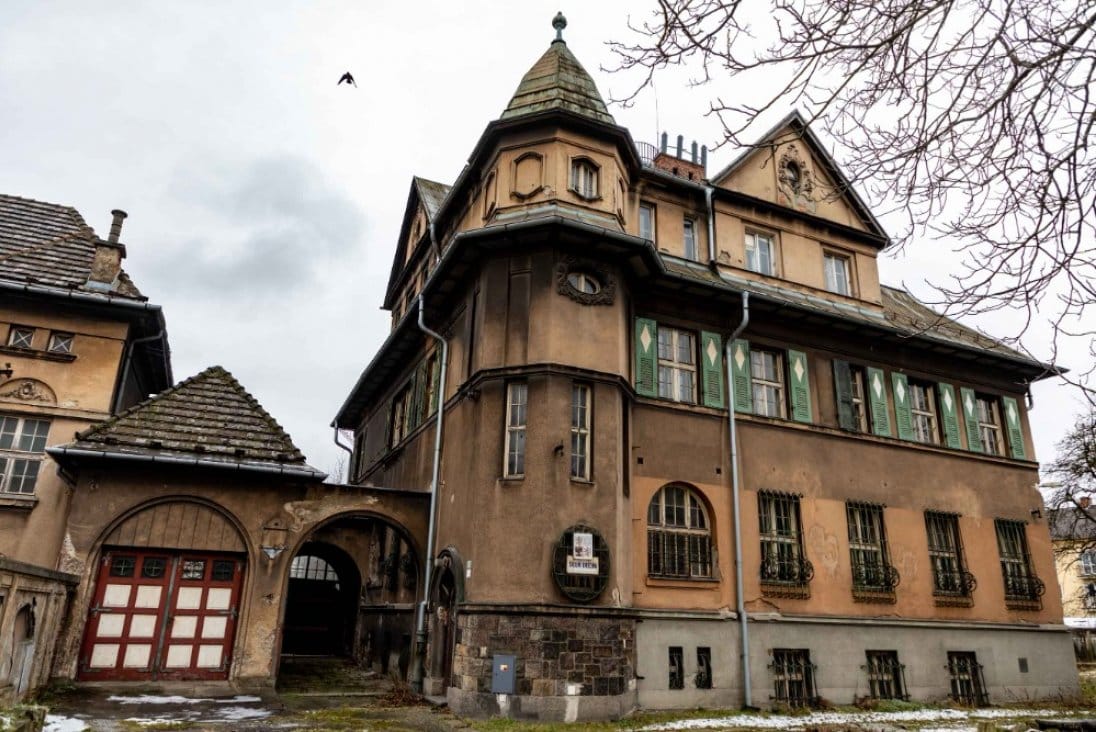
Eastern Europe has, for decades, been home to some of the finest unrenovated residential fabric on the continent. Unlike Germany, which demolished or reconditioned the majority of its pre- and post-war building stock, much of Eastern Europe kept its buildings largely intact. Almost frozen in time.
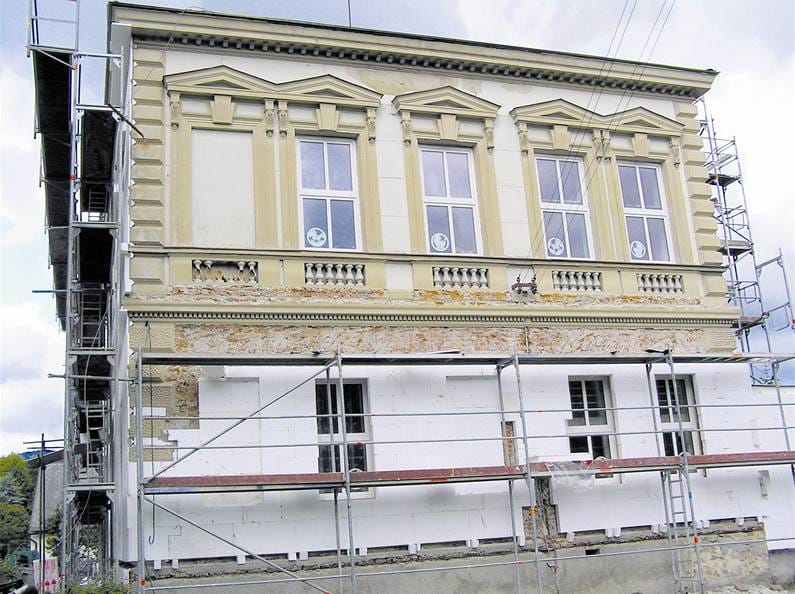
Enter EU's Renovation Wave, the policy instrument the Commission described as Europe's 'man on the moon moment'. What followed was neither a giant leap nor small step. It was foam. More precisely heavy roll out of ETICS.
What is ETICS
If you’re unfamiliar with the term, ETICS (external wall insulation) are foam insulation boards usually made from polystyrene (EPS, XPS), or in other words – plastic. And plastic, as a material, has specific properties: it resists vapor (moisture) transmission. Wrap a building in it, and you trap heat. Trap heat, and you trap moisture. You’ve now made a choice about how moisture moves – or rather, doesn’t move. What builders and developers have learned to ignore is that a sealed envelope becomes catastrophe, played out in slow motion: a decay from within.
The Fallacy
Few technologies have enjoyed such unqualified official favour as ETICS. It’s being sold as a solution for all; apply it, watch the U-values drop, collect the grant. For the homeowner, the pitch is simple: warmer home, lower bills. For the policymaker, it's simpler still: measurable in watts per square meter.
But the evidence suggests otherwise. Wrapping a house in plastic (polystyrene boards sealed with synthetic stucco) creates a new problem while appearing to solve an old one. Stucco begins to fail, sometimes within years. Mold colonizes the interface between insulation and substrate. The building decays quietly, invisibly, behind a facade that promises energy efficiency.
An Insult to Our Culture
And before the decay shows, something else has already been lost. The original facade: the brick, the stone, the render, the material evidence of how the building was constructed and inhabited has been buried. The building's ability to tell you something about itself and its place has been erased. You've demolished the building's legibility, its connection to place and history, in the name of saving it. And once the plastic goes on, that history is sealed away forever.
What ETICS claims to conserve is what it actually erases. The marketing behind this cannot hide this. But it gladly reframes it; installer error, user negligence, a problem of maintenance not design. And by then, thousands of buildings have already been wrapped, their histories coffined beneath composite systems that promise durability but deliver only slow decay.
What happens when you erase a building's distinctness? You lose the ability to understand how to build, how to inhabit, how to care for the places you live. A continent that cannot read its own buildings is a continent that has lost the ability to learn from them.
The Fabric Review
This is The Fabric Review, a new publication dedicated to understanding how we build, how we inhabit, and what we're willing to erase in the name of progress. If you believe that our built heritage matters (not as nostalgia, but as knowledge) subscribe and receive new articles as they're published.
Comments ()